Five minutes that add up
A session on the train. Another waiting for coffee. Short sessions, focused retrieval — not marathon review.
SimplyKanji
Read Japanese.
You've seen the same kanji a hundred times. You still can't recall them when it matters. That's not a discipline problem — it's a method problem. Most study tools train recognition. SimplyKanji trains retrieval: you see the character, you try to recall it before you tap. The characters you miss come back sooner. The ones you know come back less. Covers every level of the Japanese Language Proficiency Test — from beginner to advanced.
Learn to read 2,400+ Japanese kanji — with 6,000+ vocabulary words built in. Every level of the Japanese Language Proficiency Test (JLPT), from N5 to N1.
iPhone · iPad · Android
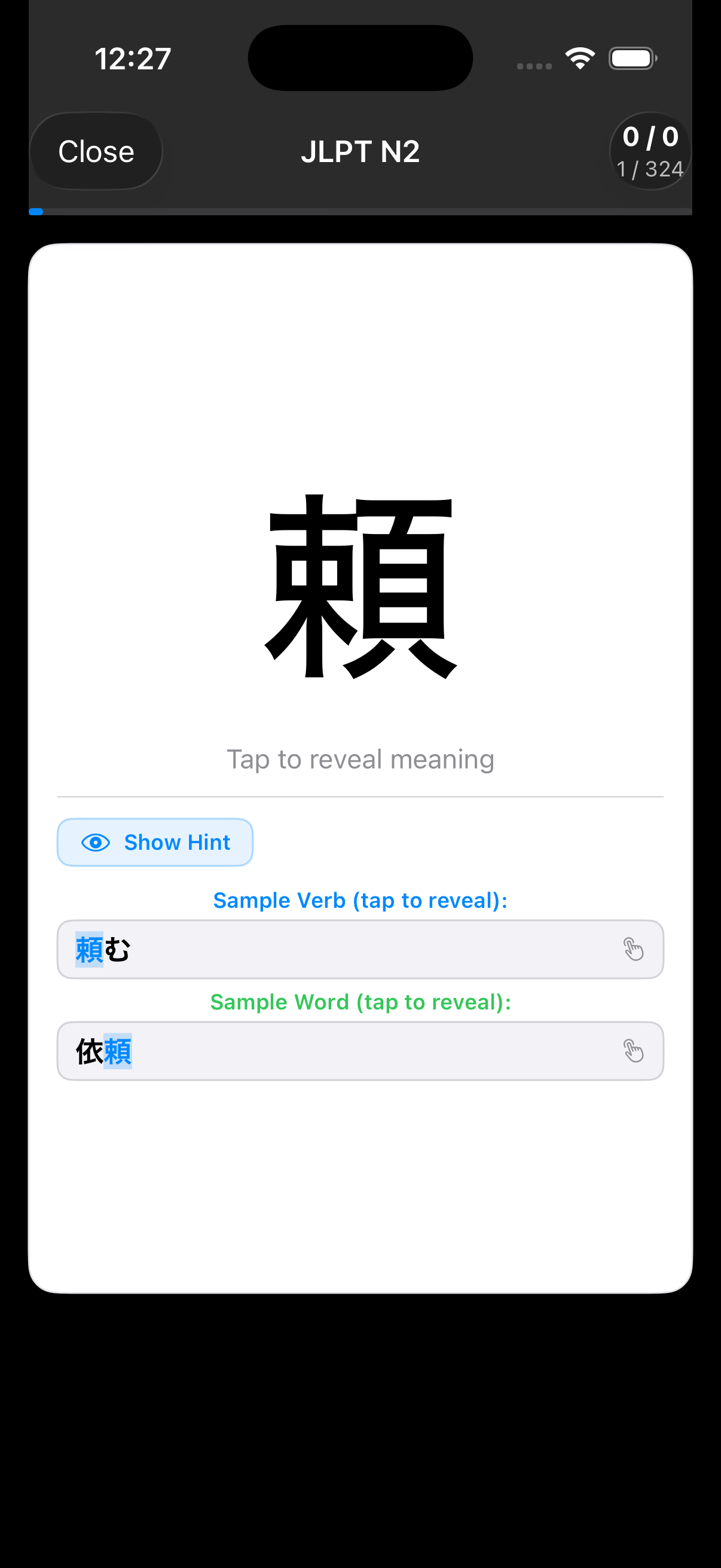
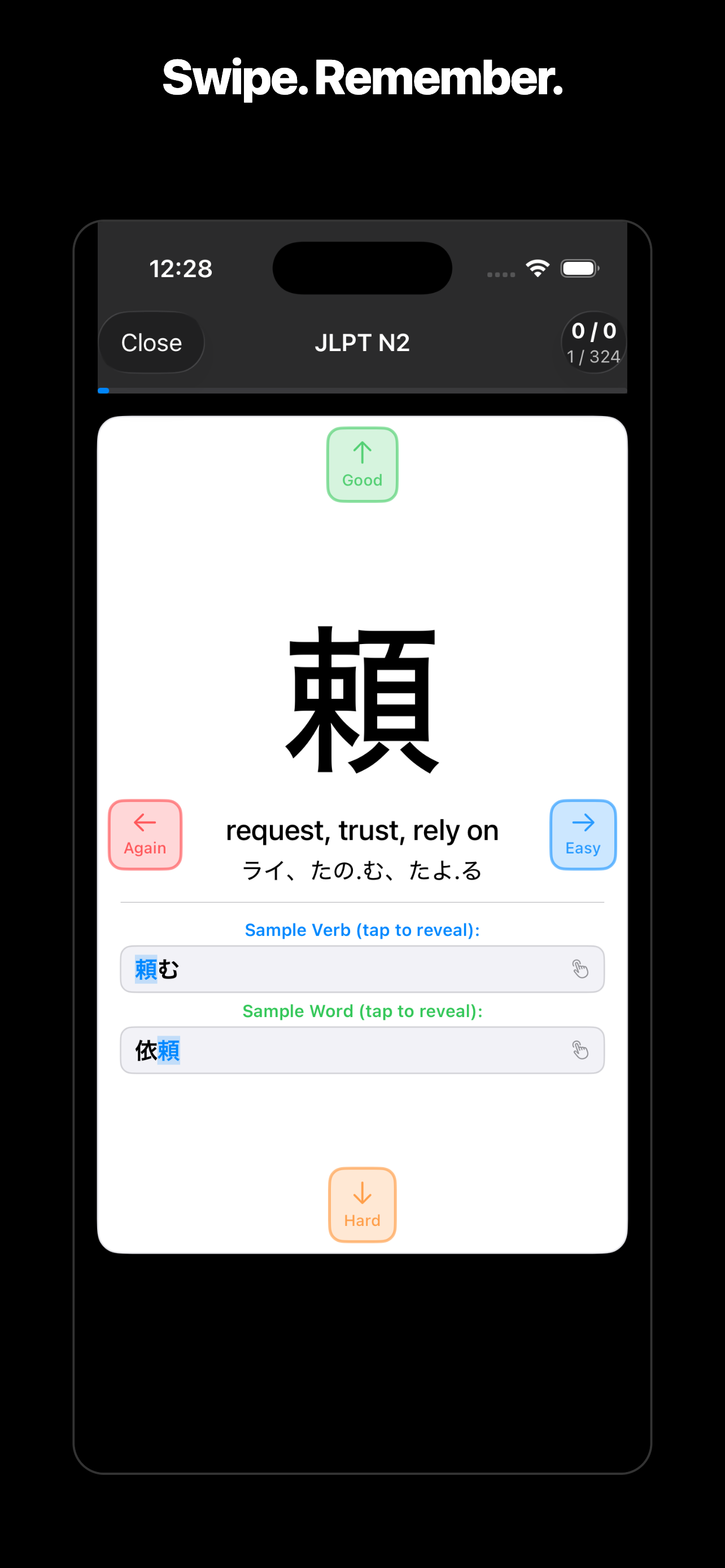
A kanji card in SimplyKanji. No clutter. Just the character and the work of remembering it.
What learners actually say
These are real posts from people learning Japanese right now. SimplyKanji was built for exactly this problem.
Experience
Most kanji apps overwhelm you with features. SimplyKanji has three steps.
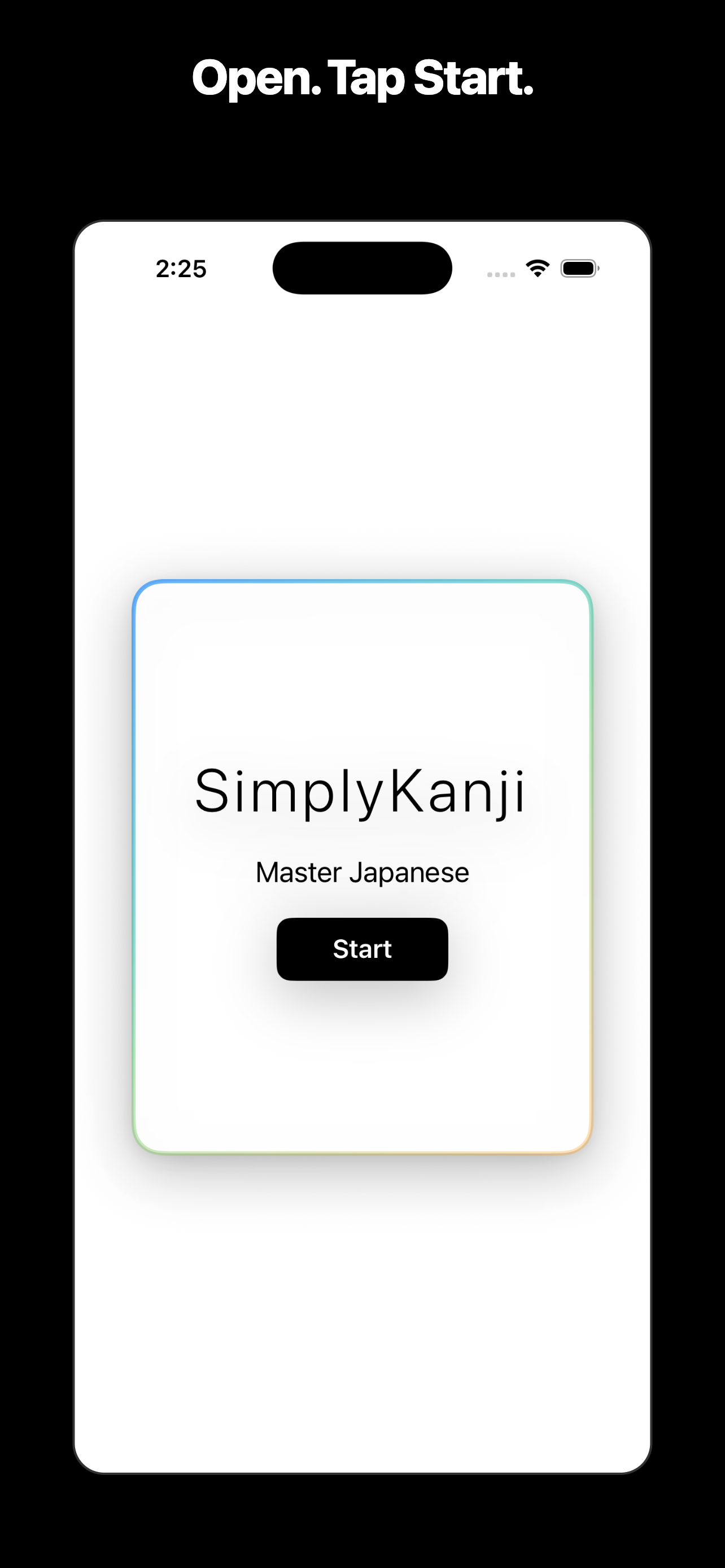
1. Open
No accounts. No login. Tap Start.
2. Choose
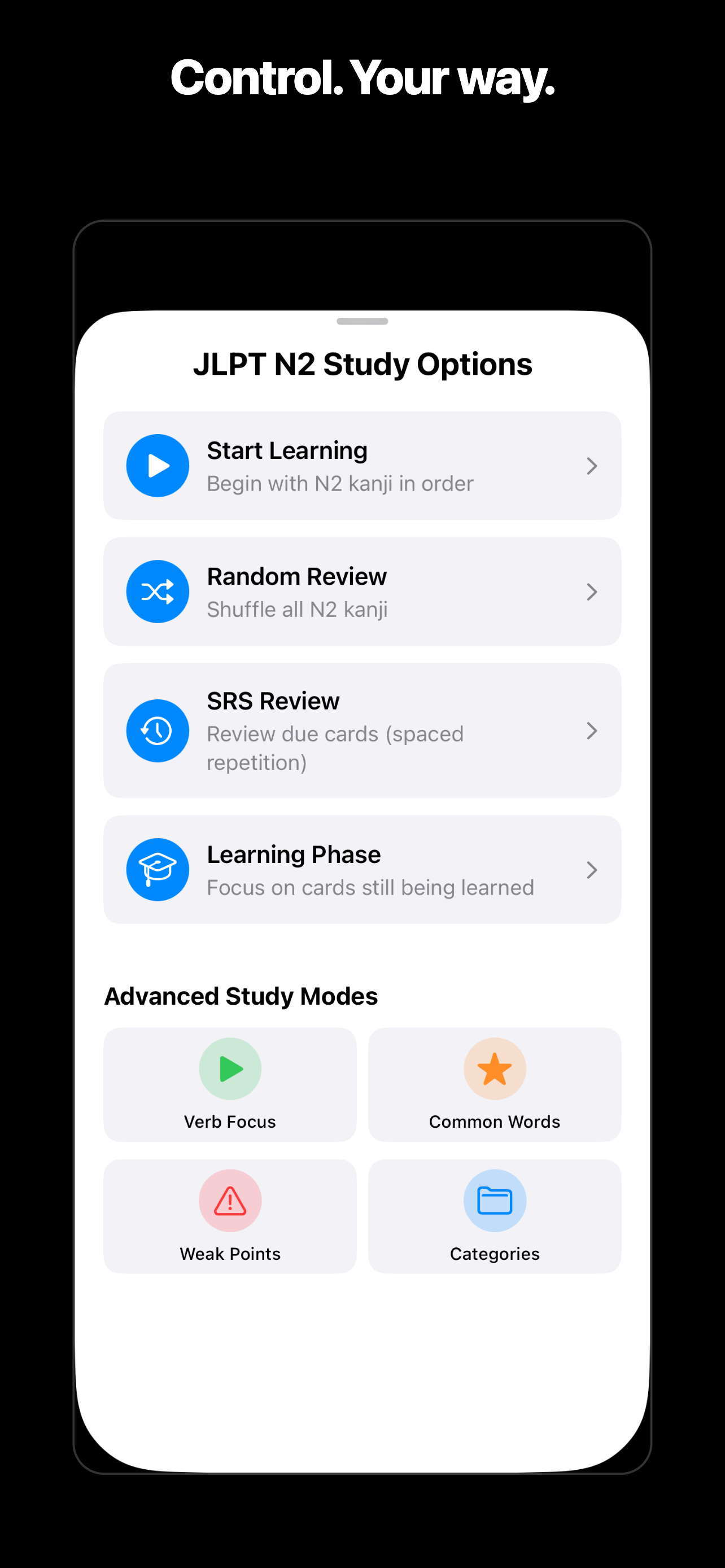
Pick your JLPT level. Sequential, random, or spaced repetition. You control how you study.
3. Recall
See the character. Try to remember before you tap. That moment of struggle is where the learning happens.
A session on the train. Another waiting for coffee. Short sessions, focused retrieval — not marathon review.
The JLPT has five levels — N5 (beginner) through N1 (advanced). Each level has its own set of kanji. You study exactly what you need, no guessing.
Start studying now.
The Science
In 1972, cognitive psychologists Craik and Lockhart established that how deeply you process information determines how well you retain it. Re-reading kanji produces shallow processing. Retrieving a character from memory — seeing the card, trying to recall before you tap — produces deep processing. The discomfort of not immediately knowing is not a failure. It is the mechanism by which the memory forms.
Robert Bjork at UCLA calls these "desirable difficulties" — study techniques that feel harder but produce significantly more durable retention. SimplyKanji's spaced repetition system is built on these findings.
Built Right
Our Story
Years ago, I was living in Japan and commuting by train. I found a flashcard app — nothing fancy, just kanji organized by JLPT level — and started reviewing on the ride to work. Five minutes out, five minutes back. Within a few months, something shifted. Signs I'd walked past for years started making sense. Not all of them. But enough that the city felt different. I was reading it.
Then the app disappeared from the App Store. Never updated, just gone. Every replacement I tried was either buried in features I didn't need or wanted a monthly subscription for basics. I just wanted to review kanji quickly. So I built SimplyKanji — the app I wished still existed.
Once the system was working, building it for hiragana and katakana was the obvious next step. Those are free, because everyone should be able to start without paying for it.
From the Blog
Why Nothing Sticks When You Study
When studying stops producing retention, the instinct is to study more. The research suggests a different diagnosis.
Read →
From the SimplyKanji Blog
Japan's new work visa rule takes effect April 15
Customer-facing roles under Category 3 or 4 now require CEFR B2 — roughly JLPT N2 with an upper-half score. What changed, and where to start.
Read →
Available on iPhone, iPad, and Android